



At the Workspace Design Show 2026, our Insights Lounge Exhale offered something unusual within the high energy of an exhibition floor: a place to slow down.
Following a strong reception from visitors, we spoke with designer Ashton Holmes about how the space came together and what it reveals about workplace design.
How did the concept for the insights lounge come together?
The starting point for the design was the show’s theme. Connected Realities: Where Physical Meets Digital. This got the team thinking about how technology appears within interiors.
“We started by asking what connected realities means in practice,” Ashton explains. “Could technology enhance the experience of a space in a subtle, flexible way? Could it allow a space to transform without needing to be rebuilt?”
That became the foundation. After every session, the pavilion shifted into a new atmospheric setting. Instead of swapping furniture or redesigning the set between talks, changes in light, animations, and scent did the work. Technology allowed the space to evolve, responding to the rhythm of the programme rather than dominating it.
“Just as we would with an office project, we always brought it back to the user experience. After concentrating on a panel for that long, people need a moment to reset,” Ashton explains. “We wanted to provide an environment that let the audience decompress before the next talk.”
How did you approach designing the physical space?
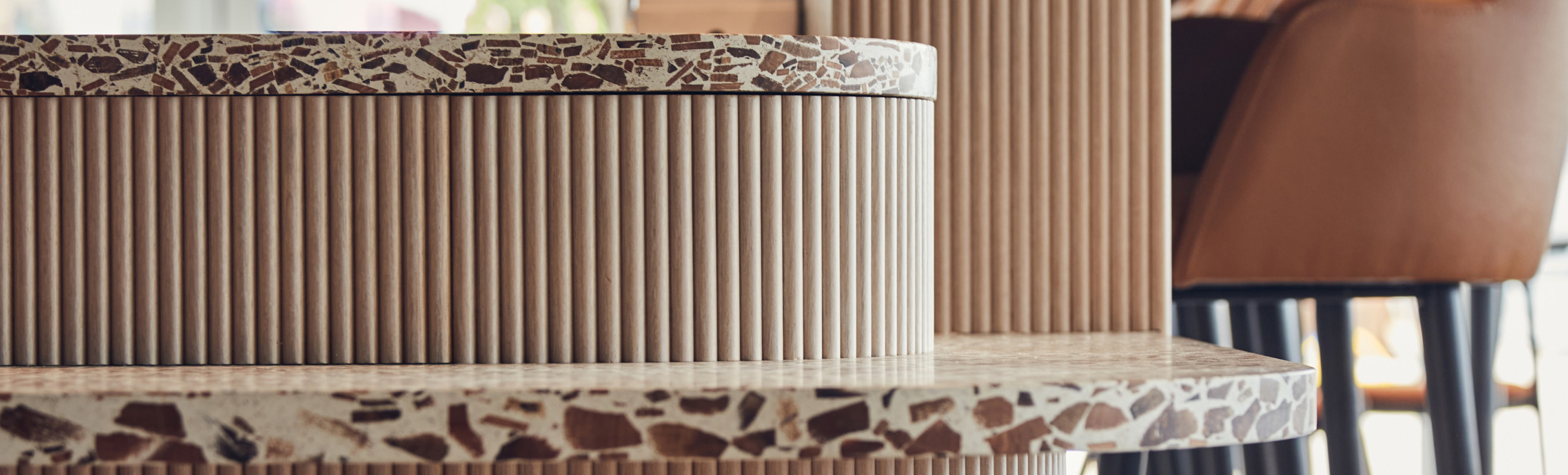
With technology providing a temporary wallpaper, the lounge itself was designed as a neutral canvas. Calm colours, soft textures, and natural materials created a base that allowed subtle shifts of atmosphere to be felt without distraction.
Visitors entered through softly layered thresholds made from recycle acoustic panels. These marked the boundaries of the space without enclosing it and helped soften the exhibition noise into a warm backdrop. Panel voices became intimate and clear, creating just enough energy to think, and just enough quiet to listen.
Transitions between spaces are just as important in offices. At Suntory’s London headquarters, transitional walkways connect high-energy sales areas with calmer client zones. Inspired by the Japanese concept of Engawa, these corridors not only guide movement, but they also filter noise and offer brief pause.

How did the interior design support focus and listening?
Once inside, the seating formed concentric ripples around a pebble-shaped stage. Low lounge seating supported focused listening, while taller perches and standing space formed a relaxed outer ring where visitors could drift in and out. The arrangement avoided rigid rows, allowing movement without disrupting conversation.
The mycelium flooring added a soft, springy touch underfoot. It combined technical performance with tactile comfort to make the room feel comfortable and easy to inhabit. Stone pots with planted greenery punctuated the space, adding a touch of life while subtly framing the stage area.
Light installations, inspired by Chinese line art that symbolises wind, floated above the space. Their flowing shapes suggested movement while remaining visually delicate, gently defining the pavilion within the wider hall.
“The lighting had to feel atmospheric rather than performative,” Ashton says. “It was there to shape the space, not steal attention from the talks.”
The same principles of biophilic design often inform our office projects. At Avison Young’s new headquarters in the Met Building, perimeter desking maximises daylight and treetop views, complemented by plants throughout that bring nature inside the space.
Biophilic materials like cork, mycelium, and seaweed panels introduce tactile variation and warmth, supporting employees in a grounding environment that feels easy to inhabit.

What role did furniture play in creating this calm setting?
Furniture reinforced this sense of comfort and calm. The team selected every piece to do more than support the body, it engaged the senses.
“Any way we could play with tactile response, we tried to do that” Ashton says. “Soft textures and rounded forms help people relax into the space rather than stay on edge.”
Bouclé upholstery wrapped the pebble seating and sofas, creating texture that felt soft and alive, rather than flat. The fabrics introduced subtle visual depth too, almost like moss growing over stone. These small details softened the space while maintaining a neutral palette.
Materiality plays a similar role in the workplace. During a unique office project in Mayfair, furniture was used to create a richer sensory experience. Natural stone and bronze laminates sit alongside oak, walnut, and marble, while varied upholstery fabrics add depth and softness. A prominent marble boardroom table paired with leather chairs anchors the space, balancing elegance with tactile warmth.
Materiality plays a similar role in the workplace. During a unique office project in Mayfair, furniture was used to create a richer sensory experience. Natural stone and bronze laminates sit alongside oak, walnut, and marble, while varied upholstery fabrics add depth and softness. A prominent marble boardroom table paired with leather chairs anchors the space, balancing elegance with tactile warmth.

How did the pavilion execute the transitions between sessions?
With the architecture and materials kept deliberately grounded, the technology could introduce moments of drama without overwhelming the space. Between talks, the pavilion moved through a series of scenes the team called ‘architectural weather’.
“I wanted the transitions to feel almost like weather passing through the space,” Ashton says. “Something you experience instinctively rather than analyse.”
Each scene drew on natural environments while paying homage to architects the team admire, including, Peter Zumthor, Tadao Ando, Sou Fujimoto, Kengo Kuma and Ruben Valdez. These shaped shifts in tone rather than literal forms. Digital animations rippled across the stage screen, while coloured light washed across the space, reshaping the mood.
Scent played a particularly interesting role in those moments. Even in early workshops, the team found how quickly it triggers a response. “Your brain reacts to scent immediately,” Ashton explains. “Even if people don’t consciously notice it, it changes the emotional tone of the space.” Each element worked together to create a brief sensory reset between sessions.
Fero’s office showcases how this adaptability can translate to the workplace. The space transforms throughout the day, from flexible work areas to company workshops and dynamic evening events. A custom LED-lit bar is central to this flexibility. With the touch of a button the colours and brightness can be adjusted to match any client, brand, or product on display. By harnessing technology in this way, we pushed the fluidity of the workspace further creating a versatile hub that adapts in real time.

Why was it important to consider all the senses when designing this space?
The team’s approach draws on how natural environments affect us. When we step into nature sensory cues can quickly alter how we feel, giving the mind a chance to reset.
“True rest isn’t just the absence of activity,” Ashton explains. “It’s about engaging the brain in a different way. When you shift the sensory experience, it helps the mind step out of one mode of thinking and prepare for the next.”
In the Insights Lounge these cues created a pause that reinvigorated the mind and prepared visitors for the next conversation.
The way a space can shift our senses doesn’t stop at events, it’s just as powerful in offices. “We’re constantly thinking about how wellbeing spaces can do more,” the team tell me. “What if a wellbeing room wasn’t just a quiet room away from desks, but an environment that actively restores focus, using light, texture, sound, and scent.”
What can a temporary pavilion like this teach us about the future of workspace design?
Although it only existed for two days, the Insights Lounge reflected the challenges that many workspaces face today. Offices must support multiple modes of work, from collaboration to focus and rest.
Our lounge design explored was how technology can help spaces transition between those states. As flexibility becomes increasingly more important for the longevity of our buildings, the ability to adapt experience rather than structure is a powerful design tool.
What’s the key lesson for designers and clients tackling their next project?
“Pay attention to atmosphere, and don’t underestimate the small things.” Ashton says immediately. “It’s in the details, like light, sound, texture, scent, where a workplace experience comes to life.”
If you’re exploring a new workspace project, our team would love to start the conversation. Get in touch.
Start your workplace transformation today.
Your workplace holds enormous potential to improve your business performance. Get in touch today, and we will unlock that potential together.