


5 office design trends for 2025
Explore the top 5 office design trends for 2025 and learn how to create purposeful, future-ready workspaces...
Modern workplace storage has evolved into a strategic design element that boosts productivity, wellbeing, and company culture. Discover how multifunctional, thoughtfully integrated storage solutions can transform your office space.
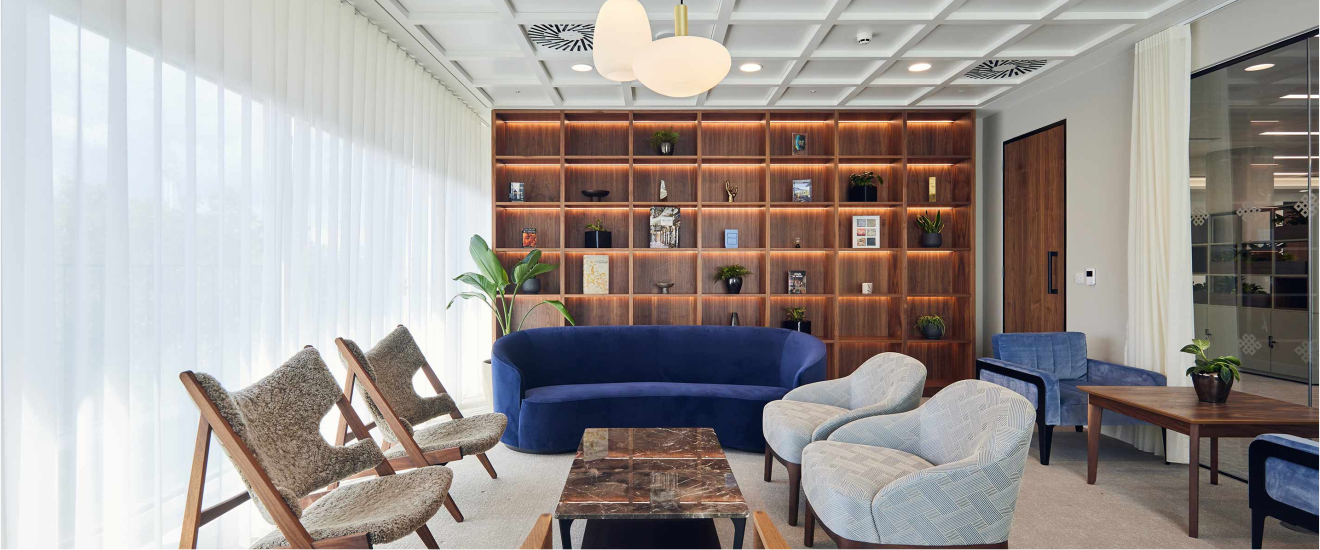
Agile working patterns and advancements in technology have reshaped offices. With employees spending less time at fixed desks and cloud systems replacing much of the paper filing once stored on-site, the need for traditional storage solutions is shrinking and ever evolving. What storage remains must now be multifunctional and thoughtfully designed to support a dynamic workforce.
This article explores why storage matters, key considerations, and the design principles that make it work.
For more ideas on optimising your workplace, see our design solutions for workspaces.
In the modern workplace, storage has an impact far beyond organisation. It shapes how employees experience the office, how effectively they work, and how connected they feel to the wider business.
Research into workplace psychology shows that clutter can undermine focus and decision-making, while orderly environments support mental clarity and better performance. When storage is designed with intention, it reduces the small frictions of daily work; employees know exactly where to find resources, and tools move with teams as they shift between spaces. By lowering cognitive load, people can stay immersed in their tasks, which is especially valuable in fast-paced, agile environments.
Every square metre of an office has value. By integrating storage into the fabric of the workspace, businesses can better accommodate a wider variety of environments from quiet focus zones to collaborative project areas and social hubs. In hybrid workplaces, where face-to-face time is limited, collaborative settings are just as crucial as focus zones and storage that maximises space is often what makes them possible. Whereas previously dedicated space has been allocated for lockers and shelving, we are now noticing that less space is required, and this is bringing new innovations in how we approach storage design.
Cluttered or chaotic environments affect how people feel in the office. Studies have shown links between disorderly spaces and elevated stress levels. For neurodiverse employees, predictable layouts and clear visual systems can make the office more navigable and less overwhelming. In this way, storage innovations can be used as a tool to support inclusivity and wellbeing, creating a calmer, more supportive atmosphere where everyone can focus and contribute.
Storage is also a powerful tool for branding. Whether it’s design that incorporates brand graphics and colour palettes, or curated displays that celebrate company history and brand values, the way a workplace manages its space sends a message. When storage is optimised and treated as an impactful design feature incorporating interesting shapes, unique materials, and purposeful messaging, it can reinforce company identity. The result leaves a positive impression on both employees and visitors.
Storage also plays an important role in sustainability. Offices with clear, well-managed systems waste less; supplies are easier to track, equipment is maintained in better condition, and recycling becomes part of the natural flow of the workplace. Storage units can also be made out of unique materials themselves, such as aluminium or even recycled clothing. As sustainability is now a central consideration for both employees and clients, the right storage solutions can help businesses demonstrate a tangible commitment to environmental responsibility.
Taken together, these elements show that storage is not simply functional. It is an important consideration of intentional, impactful office design, and should be considered from the early stages of workplace strategy.


Once you recognise the impact storage has on the workplace, the question becomes: how do you design it well? The answer lies in integrating storage as part of the workplace design rather than an afterthought. Here are three principles that can transform storage from a functional necessity into a driver of productivity, culture, and flexibility.
Storage should move in rhythm with how people use the office. As we know, lockers are now more common than pedestals, positioned near hot-desking areas so staff can set up and settle in quickly. Meeting room storage is now smaller and more discreet thanks to updated audio-visual setups, and ergonomic furniture is a more popular and accessible option. Tech updates such as app-operated locker systems also reduce friction when accessing personal items and daily tools, and can even be used as a way to learn about how employees are using storage within their workplace.
No workplace stands still. Teams expand, working patterns evolve, and spaces are reconfigured to meet new priorities. Storage can also be designed to adapt over time. As cloud systems and smart technology have reduced the need for traditional filing, less physical storage is now required and that can be a strength. This adaptability ensures that spaces are future-proofed and can be reshaped for different user preferences without storage becoming an obstacle. Modular shelving systems can be stacked or rearranged, central features can be designed with bespoke storage elements, and moveable pieces can and adapt as spaces and business needs evolve.
Well-designed storage doesn’t just support work; it supports people. Heated lockers support the use of workplace gyms and different commuting routines. Open storage in communal areas inspired by residential design makes the office a welcoming place for collaboration and connection. Recycling stations integrated into kitchens or across floors and shared areas encourage sustainable habits. Even something as simple as a cushioned bench with hidden storage turns practicality into hospitality, creating moments of ease and care that employees notice.
At Peldon Rose, we design storage that goes beyond function, helping workplaces stay efficient, flexible, and people-focused. Explore some of our recent projects to see how integrated storage can achieve this in real time.
Napier Park Global Capital – celebrating culture through design
Napier Park’s new office brings the firm’s values to life, with storage playing a key role in how culture is expressed. As you enter the space, an awards cabinet showcases the achievements of the business and its people, setting a tone of excellence and pride. In this way, storage becomes part of the storytelling, reflecting a workplace that is both welcoming and client-focused.
The Leverhulme Trust – collaboration with clarity
The Leverhulme Trust required a workplace that supported collaboration without losing order. Bespoke timber joinery walls act as semi-permeable dividers, defining team and collaboration zones while maintaining openness. Bookshelves in the library provide both storage and character, and acoustic panels help maintain a calm, focused environment. By integrating storage into the design, the office balances organisation with collaboration and quiet concentration.
MillTech – a hybrid fintech future
MillTech’s new workspace needed to reflect its hybrid, fast-moving culture. Storage was key to delivering this agility. From cupboards that neatly conceal a table tennis table when not in use, to movable furniture in the entrance lounge that can shift between casual meetings and social gatherings. Every element became an enabler of innovation, supporting a fintech workforce built on speed and adaptability.


Smart storage solutions are more than a convenience; they are a key consideration of workplace strategy and clever office design.
● Thoughtfully designed storage supports workflow, maximises space, enhances aesthetics, and adapts to flexible and hybrid working patterns.
● Storage solutions need to be integrated into workplace design from the outset to ensure they are effective and used.
● Office design and build companies like Peldon Rose can provide the expertise to create purpose-led storage that reinforces culture and supports team productivity.
Explore more insights and design inspiration by visiting News & Insights.
Ready to transform your office? Contact us to speak with our expert team at Peldon Rose today.

Explore the top 5 office design trends for 2025 and learn how to create purposeful, future-ready workspaces...

Our latest research looks into the best UK and London locations for work-life balance and the most searched...

Learn strategies for creating an inclusive workplace in our guide to inclusive office design

Your workplace holds enormous potential to improve your business performance. Get in touch today, and we will unlock that potential together.