Designing workplaces for neurodiversity
Neuroinclusive design isn't about creating one perfect workspace, it's about offering choice. With around 1...
What does it really mean to design a workplace around people? That was the question at the heart of our panel at Clerkenwell Design Week, and the answers were more nuanced than you might expect.

At Clerkenwell Design Week this year, we hosted a panel exploring a deceptively simple question: what does it really mean to design a workplace around people?
Bringing together voices from design, workplace strategy and occupational psychology, the session explored how wellbeing can be shaped by thoughtful design, shared policies and the choices people are empowered to make at work.
Throughout the session, the audience shared anonymous “confessions” about their workplace experiences, grounding the conversation in real insight.
What emerged was a clear perspective: wellbeing is built in the everyday experience of work.
Chronic stress is a long-term cycle, building over time when there’s an imbalance between the demands of work and the support people have to meet them.
Pressures like workload, pace, and relationships can steadily drain energy. At the same time, the right conditions like thoughtful work structures, strong team interactions and environments that enable people to perform at their best, help restore it.
Seen through this lens, the focus shifts to the day-to-day experience of work, where those conditions are shaped and sustained.
A helpful way to frame this came from occupational psychologist Rachel Lewis, who shared a simple ABC model for what people need to thrive at work:
Autonomy — a sense of control and flexibility.
Belonging — feeling safe, valued, and able to speak up.
Competence — feeling effective and able to do your job well.
These needs don’t sit separately from the workplace, they are directly influenced by the environments people move through, which is where human-centric design becomes critical.
During the panel, Senior Project Designer Natasha Hewlett, brought a clear definition to what human-centric design means in practice.
At its core, it’s about creating environments that prioritise people’s wellbeing, not just their productivity.
That starts with the fundamentals of physical wellbeing. Comfortable acoustics, good light, fresh air, and having the desk space you need. When the basics are right people can settle into their work without friction. Alongside this, more subtle elements of perceived comfort, from a sense of calm to a connection with natural elements, play an equally important role in how a space is experienced.
One of the clearest themes to emerge was the role of choice. People work in different ways, at different rhythms, with different energy levels throughout the day. A well-designed workplace supports that diversity rather than trying to standardise it.
This often comes down to designing environments that offer variety. Spaces for focus, collaboration, and rest all have a role to play, supported by details like acoustic zoning, shifts in colour and lighting, or adaptable work settings.
Polly Lindley pointed to Avison Young’s London office as a strong example, where a Wi-Fi-free terrace provides a deliberate contrast to highly connected work settings. It’s a simple intervention, but an effective one, creating a setting that naturally encourages people to step away, reset and recharge.
Design has the ability to influence behaviour without dictating it. The environment creates the conditions that gently guide how people work, while still leaving room for individual preference.
That distinction matters. As the panel reflected, people’s routines and preference vary too widely for a single mandate to work for everyone. It’s here that design and workplace strategy need to work in tandem.
Even the most thoughtfully designed workplace needs the right support around it.
For these environments to work in practice, they must be underpinned by clear workplace strategy, effective change management, and consistent communication. This helps people understand what has changed, why it matters, and how the space is intended to be used.
Together, these elements shape something less visible but crucial: whether people feel comfortable working differently. Clarity, consistency and cultural cues all contribute to a sense of psychological safety, where using a quiet space, stepping away from a desk, or working flexibly feels natural and free from judgment.
With this partnership of design and policy, workplaces function as intended. Providing access to different spaces while also giving people the confidence and support to use them.
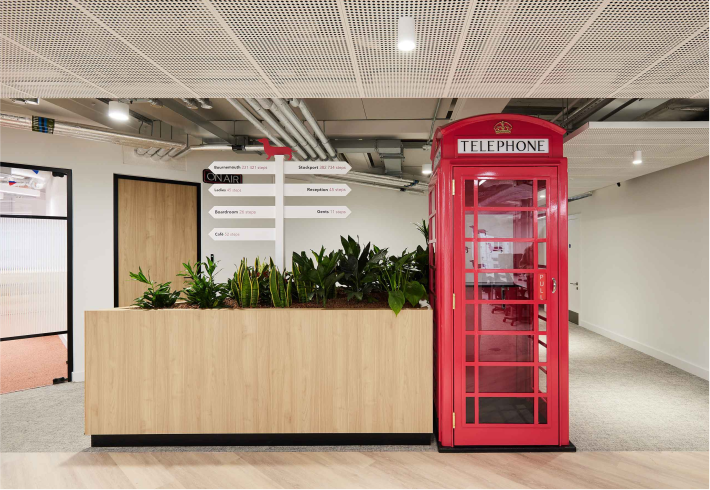
Neuroinclusive design isn't about creating one perfect workspace, it's about offering choice. With around 1...

Today's workplace spans five generations, and with the right design, that's a strength, not a challenge. By...

What does it really mean to design a workplace around people? That was the question at the heart of our...
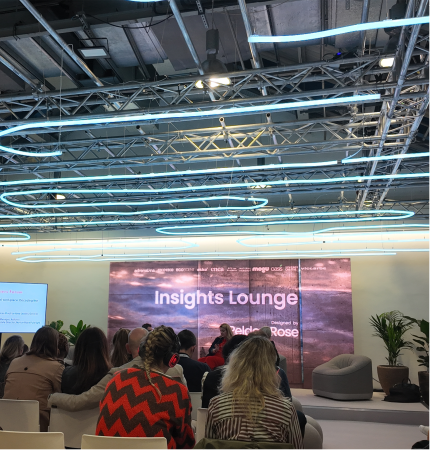
At the Workspace Design Show 2026, our Insights Lounge Exhale showed how subtle shifts in light, sound, and...
Your workplace holds enormous potential to improve your business performance. Get in touch today, and we will unlock that potential together.